

Token Approvals, Transaction Simulation, and the New Discipline of DeFi Safety
Many costly DeFi mistakes do not begin with a dramatic hack. They begin with a routine click: “Approve,” “Confirm,” or “Sign.” The counterintuitive part is that a transaction can succeed exactly as designed and still leave a user exposed later. An approval may grant a smart contract permission to spend tokens without moving anything immediately, while a transaction simulation may warn about a failure without proving that the future transaction is safe. Understanding that distinction is more useful than memorizing a list of wallet warnings.
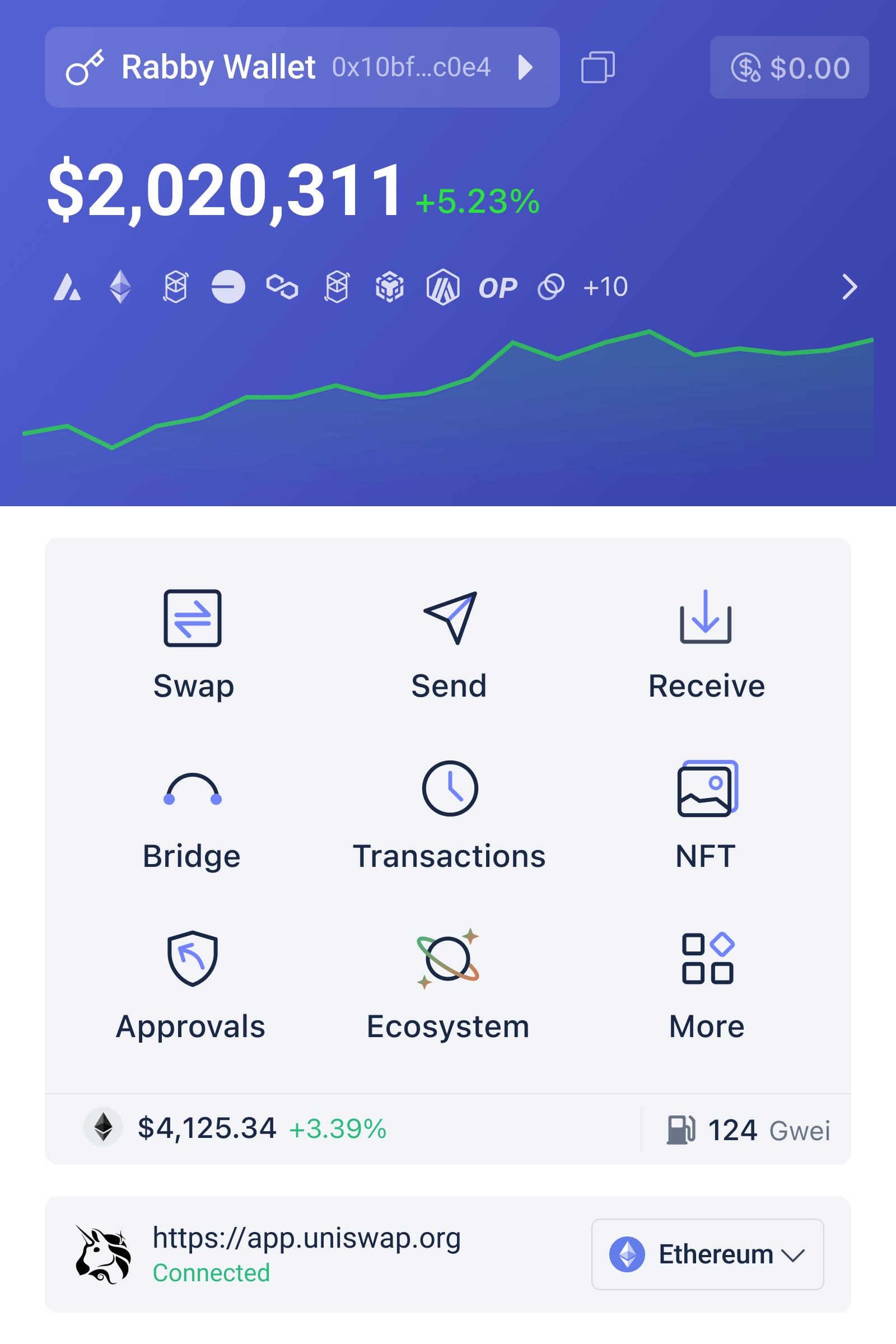
For US users moving among decentralized exchanges, lending markets, bridges, and liquid-staking applications, token approval management and simulation are becoming core wallet functions rather than optional conveniences. Rabby Wallet’s current positioning as a wallet for Ethereum and EVM chains reflects this broader shift: the wallet is no longer merely a place to store keys and display balances. It is increasingly an interpretation layer between a user and complex smart-contract behavior.
Why token approvals are different from ordinary transfers
A normal token transfer is comparatively easy to conceptualize: a user instructs a token contract to move a specified amount from one address to another. A token approval usually does something else. Under common Ethereum token standards, the wallet owner authorizes a spender—often a decentralized exchange, router, lending protocol, or bridge contract—to move tokens on the owner’s behalf up to a stated allowance.
The crucial detail is persistence. An approval can remain active after the original swap or deposit has finished. If the allowance is large, or effectively unlimited, the contract may retain authority to spend those tokens later. That does not mean the contract will necessarily misuse it. It does mean the risk is no longer confined to the moment when the user clicked Confirm.
This creates a useful mental model: an approval is closer to issuing a standing power of attorney than to handing over cash once. The analogy is imperfect because smart contracts operate under code-defined rules, but it captures the time dimension. A transfer is usually an event. An approval can be an ongoing permission.
How approval management evolved
Early DeFi users often treated approvals as background plumbing. A new application might ask for a very high allowance because repeated approvals cost gas and create friction. In periods of high network fees, users had a practical reason to prefer fewer transactions. The trade-off was easy to overlook: convenience today could increase the blast radius of a compromised contract, faulty upgrade, malicious interface, or mistaken interaction tomorrow.
The industry’s response has moved in two directions. Protocol developers have experimented with more targeted permissions and newer authorization designs, while wallets have become more active in explaining what a transaction or approval means. Neither direction eliminates risk. More granular permissions can improve control but may be harder for ordinary users to understand. Requiring an approval for every interaction can reduce standing exposure but increases cost, delay, and the chance that users approve hastily just to complete a trade.
Approval management therefore is not simply a matter of choosing “safe” or “unsafe.” It is a risk-budgeting decision. A user might reasonably accept a limited allowance for a well-understood application used frequently, while choosing a precise amount—or revoking access afterward—for a one-time bridge or an unfamiliar site.
What transaction simulation can and cannot tell you
Transaction simulation attempts to execute a proposed transaction in an analytical environment before it is broadcast to the network. The result can reveal expected token movements, contract calls, reverts, changes in balances, and other effects. For a user, this is valuable because the raw transaction data is rarely written for human comprehension.
Simulation changes the question from “What does this button say?” to “What does this call appear likely to do?” That is a major improvement. A warning that a swap may revert, that an approval is unusually broad, or that assets will leave the wallet can interrupt a dangerous habit: confirming first and investigating later.
But a simulation is not a guarantee. Its result depends on the assumed blockchain state, the accuracy of the simulation service, the behavior of external contracts, and the time between simulation and execution. Markets can move. Liquidity can change. A contract can reference data that changes after the simulation. Some interactions depend on signatures, off-chain services, block timing, or conditions that are difficult to reproduce perfectly.
There is also a deeper boundary: simulation can describe execution, but it cannot independently establish trust. A transaction that sends funds to the intended contract may still interact with a protocol the user does not understand. A successful simulation can confirm that code ran as expected under modeled conditions; it cannot certify the project’s governance, upgrade authority, economic design, or future behavior.
Using Rabby as an interpretation layer
This is where a wallet such as Rabby can be useful for DeFi users who want more context before signing. Someone preparing to download and install the rabby extension should think of it not as a substitute for judgment, but as a tool for making judgment more informed. The practical value lies in surfacing transaction consequences, approval requests, network context, and potential warnings close to the moment of decision.
That timing matters. Security information is most effective when it appears before authorization, not after a user has already committed funds. A wallet that helps connect the requested permission with the expected outcome can reduce a common cognitive error: treating every wallet prompt as an equivalent “yes.” In reality, “Approve 100 tokens for this swap” and “Approve an unrestricted amount to this spender” are materially different decisions.
Users should still inspect the basics. Is the application the one they intended to use? Is the network correct? Is the spender a contract associated with that application, rather than an unfamiliar address? Does the simulated result match the promised action? If the answer is unclear, pausing is rational. DeFi rewards speed in some situations, but uncertainty is not a gas fee that must always be paid.
A practical framework for approval decisions
A reusable approach is to assess four dimensions: amount, identity, duration, and reversibility. First, compare the requested allowance with the amount actually needed. A large allowance may be convenient, but convenience should be treated as a cost-saving feature, not as evidence that the request is appropriate.
Second, examine identity and context. The spender address matters more than the visual name of a website. Phishing pages can imitate familiar branding, and a wallet cannot make a fraudulent premise legitimate merely by displaying it clearly. Confirm that the site, chain, token, and intended action align.
Third, consider duration. A one-time transaction and a recurring strategy have different permission needs. If an application will not be used again, retaining an allowance offers little practical benefit. If it will be used regularly, a limited approval may still be preferable when the protocol supports it and the extra confirmations are acceptable.
Finally, ask how reversible the decision is. Approvals can often be reduced or revoked through token contracts or dedicated management tools, but revocation itself is an on-chain transaction that consumes gas. “Reversible” does not mean free, instant, or able to recover assets already taken by a malicious spender.
Where the model breaks
Approval hygiene is important, but it is not a complete security strategy. Revoking an approval does not repair a compromised private key, undo a fraudulent signature, or recover assets transferred through a valid transaction. It also does not protect against every type of authorization risk. Some systems use permit-style signatures, delegated accounts, or other mechanisms that may not appear identical to a traditional allowance.
Transaction simulation has boundaries as well. A malicious interface might present a transaction whose visible outcome looks ordinary while relying on a separate signature request or a later interaction. Conversely, a legitimate complex protocol can produce warnings because its behavior is difficult to summarize. Users should interpret alerts as evidence requiring investigation, not as an infallible verdict.
The most reliable posture combines layers: use a reputable wallet, keep software obtained from an official source, separate long-term holdings from active DeFi funds, verify the network and application, read approval scope, and treat unexpected signature requests as a separate event requiring scrutiny. Hardware wallets and transaction limits can add further protection, but they do not make a user immune to approving the wrong instruction.
What to watch next in DeFi wallet design
The likely direction is not simply more warnings. It is better permission design and clearer translation of machine-readable transactions into human decisions. If wallets can show not only what a contract will do now but also what authority remains afterward, users may begin to manage permissions as deliberately as they manage balances.
That progress depends on difficult trade-offs. More information can overwhelm users. Simplified summaries can hide important complexity. Automated risk scores may be useful signals, but they can create false confidence if users treat them as certifications. The strongest systems will probably combine simulation, permission visibility, provenance signals, and user-controlled limits rather than relying on one score or one warning.
Frequently asked questions
Does a token approval immediately transfer my tokens?
Usually, no. An approval generally authorizes a specified spender to transfer tokens later, subject to the allowance and the token’s contract rules. The approval itself may not move tokens, but it can create continuing exposure until the allowance is reduced, used, or revoked.
Does transaction simulation guarantee that a DeFi transaction is safe?
No. Simulation can provide an informed estimate of how a transaction may execute under particular conditions. It can identify unexpected outputs, likely failures, and suspicious permission requests, but it cannot guarantee the honesty of a protocol, eliminate smart-contract risk, or predict every change before the transaction is mined.
Should I always approve only the exact token amount?
Not necessarily. Exact approvals can reduce standing exposure, but they may require additional transactions and gas. The sensible choice depends on the application, the frequency of use, the user’s tolerance for friction, and whether the spender and protocol are well understood. The important point is to make the trade-off consciously rather than accepting a large allowance by default.
The central lesson is simple but easy to miss: DeFi safety is not only about where assets are held. It is also about which contracts are allowed to act, what a pending transaction is expected to do, and how long a permission remains in force. Approval management reduces persistent authority; simulation improves visibility into immediate execution. Used together—and treated as aids rather than guarantees—they give users a more accurate way to decide when a familiar-looking click deserves a second look.